Table of Contents
- Introduction
- What Is WordPress?
- What Is Shopify?
- WordPress vs Shopify: Full Comparison
- Ease of Use
- eCommerce Features
- SEO Performance
- Pricing
- Design & Flexibility
- Security & Maintenance
- When to Choose WordPress
- When to Choose Shopify
- Final Verdict
- FAQs
Introduction
When it comes to building a website or online store in 2026, the WordPress vs Shopify debate remains one of the most searched questions by business owners and developers alike. Both platforms are powerful, both are widely trusted — but they serve fundamentally different purposes.
Whether you’re launching your first website, migrating an existing store, or advising a client, understanding the difference between WordPress and Shopify is essential before committing to either platform. This in-depth guide compares every major factor — pricing, SEO, design flexibility, eCommerce features, and more — so you can make the right decision for your business in 2026.
What Is WordPress?
WordPress is the world’s most popular open-source content management system (CMS), powering over 43% of all websites on the internet. Originally built for blogging, WordPress has evolved into a full-featured platform capable of handling any type of website — from business sites and portfolios to membership platforms and full-scale eCommerce stores via WooCommerce.
Key facts about WordPress:
- Fully open-source and self-hosted (WordPress.org)
- Complete design and functionality freedom through themes and plugins
- WooCommerce enables robust eCommerce capabilities
- Requires a separate hosting provider and domain
- Best suited for content-rich websites, blogs, and businesses needing maximum flexibility
- Learn more at WordPress.org, also you can check out our wordPress services.
What Is Shopify?
Shopify is a dedicated eCommerce platform built from the ground up for selling products online. As a Software-as-a-Service (SaaS) solution, Shopify handles hosting, security, and software updates — so you can focus entirely on running your store.
Key facts about WordPress:
- All-in-one hosted eCommerce solution
- Beginner-friendly with drag-and-drop store builder
- Built-in payment processing, inventory management, and shipping tools
- Over 8,000 apps in the Shopify App Store
- Best suited for product-focused businesses that want fast, reliable online selling
- Explore plans at Shopify.com, also you can check out our Shopify services.
WordPress vs Shopify: Full Head-to-Head Comparison
| Feature | WordPress | Shopify |
|---|---|---|
| Platform type | Open-source CMS | Hosted SaaS |
| Best for | Content + eCommerce | eCommerce first |
| Ease of use | Moderate | Easy |
| SEO control | Advanced | Standard |
| Pricing | $5–$50/month (hosting) | $39–$399/month |
| Transaction fees | 0% | 0.5%–2% |
| Customization | Unlimited | Within platform limits |
| eCommerce | WooCommerce plugin | Built-in |
| Security | Self-managed | Fully managed |
1. Ease of Use
Shopify — Easier for Beginners
Shopify wins on ease of use without question. You can launch a fully functional store in hours — no coding, no server configuration, no plugin hunting. Everything is pre-built and ready to sell.
WordPress — Powerful but Requires a Learning Curve
WordPress demands more setup effort. Installing the CMS is simple, but configuring your theme, installing WooCommerce, and managing plugins requires time and some technical knowledge. The reward, however, is far greater flexibility and control.
Verdict: Shopify for speed and simplicity. WordPress for power users who want full control.
2. eCommerce Features
Shopify for eCommerce
Shopify was purpose-built for eCommerce and offers:
- Native checkout and payment processing via Shopify Payments
- Multi-currency and multi-language support
- Built-in abandoned cart recovery
- Seamless selling on Amazon, Instagram, and TikTok Shop
- Real-time shipping rate calculations
WordPress + WooCommerce for eCommerce
WordPress with WooCommerce matches Shopify feature for feature and often exceeds it:
- No platform transaction fees
- Complete control over the checkout flow
- Flexible product types — physical, digital, subscriptions, bookings
- Thousands of WooCommerce extensions available
- Full data ownership with no platform lock-in
- Verdict: Both are excellent for eCommerce. Shopify launches faster; WordPress + WooCommerce is more customizable long-term.
3. SEO Performance — WordPress vs Shopify
WordPress Dominates for SEO
If SEO is a priority — and it should be — WordPress is the clear winner in the WordPress vs Shopify debate. With plugins like Yoast SEO or Rank Math, you gain:
- Full meta title and description control
- Custom XML sitemaps and schema markup
- Advanced Core Web Vitals optimization via caching plugins
- Complete URL structure control
- Powerful content marketing capabilities for blogging and link building
Shopify SEO Limitations
Shopify has improved its SEO significantly in recent years, but still has notable constraints:
- Forced URL structures (e.g., /collections/, /products/)
- Limited blogging platform compared to WordPress
- Less granular schema markup control
- Redirect management is less flexible
Verdict: WordPress is the superior platform for SEO — especially for businesses relying on organic search traffic as a primary growth channel.
4. Pricing Comparison
WordPress Pricing
| Cost | Range |
|---|---|
| Hosting | $5–$50/month |
| Domain | ~$15/year |
| Premium theme | Free–$200 (one-time) |
| Plugins | Free–$200/year |
| Transaction fees | 0% |
Shopify Pricing
| Plan | Monthly Cost |
|---|---|
| Basic Shopify | $39/month |
| Shopify | $105/month |
| Advanced Shopify | $399/month |
| Transaction fees | 0.5%–2% (external gateways) |
WordPress is generally more cost-effective at scale — especially because there are zero transaction fees with WooCommerce. Shopify’s pricing is more predictable and includes managed hosting, which appeals to business owners who want a simpler billing structure.
Verdict: WordPress wins on long-term value. Shopify wins on pricing predictability.
5. Design & Flexibility
WordPress Design Freedom
WordPress offers virtually unlimited design flexibility. With thousands of themes and page builders like Elementor, Divi, or GeneratePress, you can build almost any design imaginable without touching code.
Shopify Design Options
Shopify themes are polished and eCommerce-optimized. Customization beyond theme settings requires knowledge of Liquid — Shopify’s proprietary templating language. It’s flexible, but within defined boundaries.
Verdict: WordPress for maximum design freedom. Shopify for polished, eCommerce-ready aesthetics out of the box.
6. Security & Maintenance
Shopify — Fully Managed Security
Shopify manages all security patches, SSL certificates, and server updates automatically. You never need to worry about plugin vulnerabilities or server configuration.
WordPress — Self-Managed but Fully Controllable
WordPress places security responsibility on the site owner. With a managed WordPress host (such as WP Engine or Kinsta) and security plugins like Wordfence, WordPress can be equally secure — but it requires active management.
Verdict: Shopify wins for hands-off security. WordPress wins for teams who want complete control.
When Should You Choose WordPress?
WordPress is the right platform if you:
- Run a blog, news site, or content-heavy business where SEO matters most
- Need advanced customization and full ownership of your data
- Want to combine powerful content marketing with an eCommerce store
- Are building a site that’s more than just a product catalog
- Have access to a developer or enjoy learning new technical skills
When Should You Choose Shopify?
Shopify is the right platform if you:
- Are focused exclusively on selling products online
- Want to launch quickly without technical complexity
- Prefer predictable monthly pricing that includes hosting and security
- Need a reliable, hosted solution that scales with your store
- Are managing a high-volume eCommerce operation
Final Verdict: WordPress vs Shopify in 2026
| Category | Winner |
|---|---|
| Ease of Use | Shopify |
| eCommerce | Tie |
| SEO | WordPress |
| Pricing (long-term) | WordPress |
| Design Flexibility | WordPress |
| Security | Shopify |
| Content Marketing | WordPress |
| Quick Launch | Shopify |
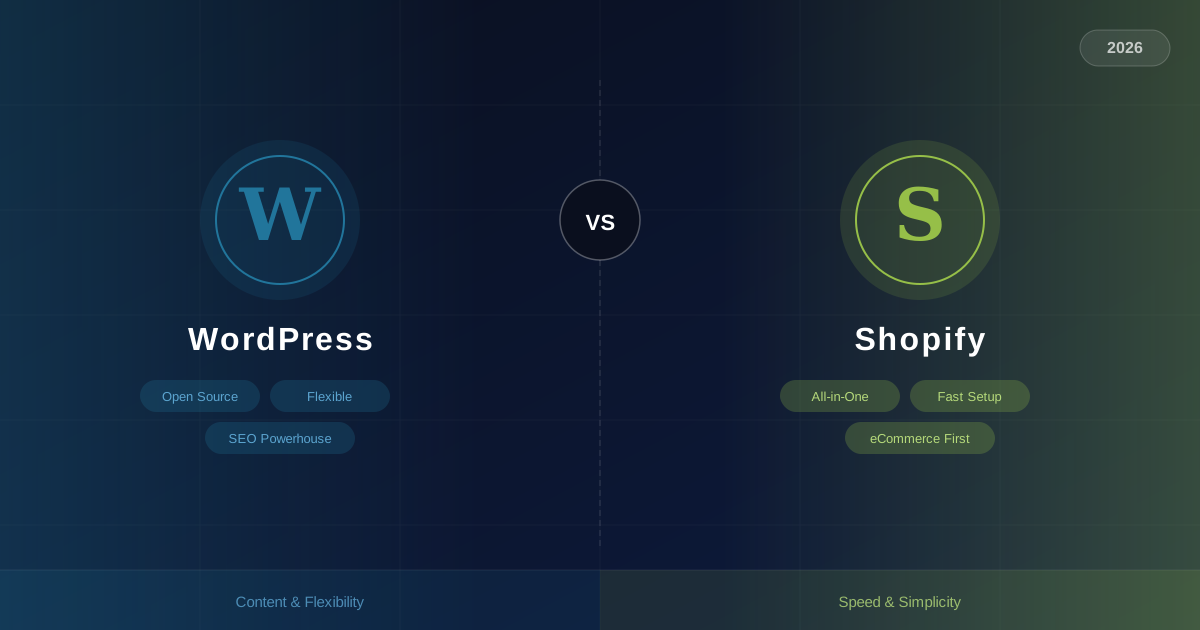
In the WordPress vs Shopify debate, there’s no universally correct answer — the right platform depends entirely on your business goals, technical comfort level, and growth strategy.
Choose WordPress if content, SEO, and long-term flexibility are your priorities. Choose Shopify if fast setup, managed hosting, and a dedicated eCommerce experience are what you need most.
Frequently Asked Questions
Q: Is WordPress better than Shopify for SEO?
Yes. WordPress gives you significantly more control over SEO — including custom URL structures, schema markup, advanced plugin options like Rank Math or Yoast, and superior blogging and content marketing capabilities.
Q: Can I use WordPress for eCommerce?
Absolutely. WordPress with WooCommerce is one of the most powerful eCommerce solutions available in 2026, used by thousands of successful online stores worldwide — with no transaction fees.
Q: Which is cheaper — WordPress or Shopify?
WordPress is typically more affordable in the long run. Hosting can start as low as $5–$10/month, and there are no transaction fees with WooCommerce. Shopify starts at $39/month and charges additional transaction fees when using external payment gateways.
Q: Can I switch from Shopify to WordPress later?
Yes, but it requires a migration process. It’s better to choose the right platform from the start. If you’re unsure, consult a WordPress or Shopify development expert before launching.
Q: Which platform is better for beginners in 2026?
Shopify is easier to get started with for complete beginners. WordPress has a steeper learning curve but offers far more long-term flexibility.